Solar PV's and our electric boilers
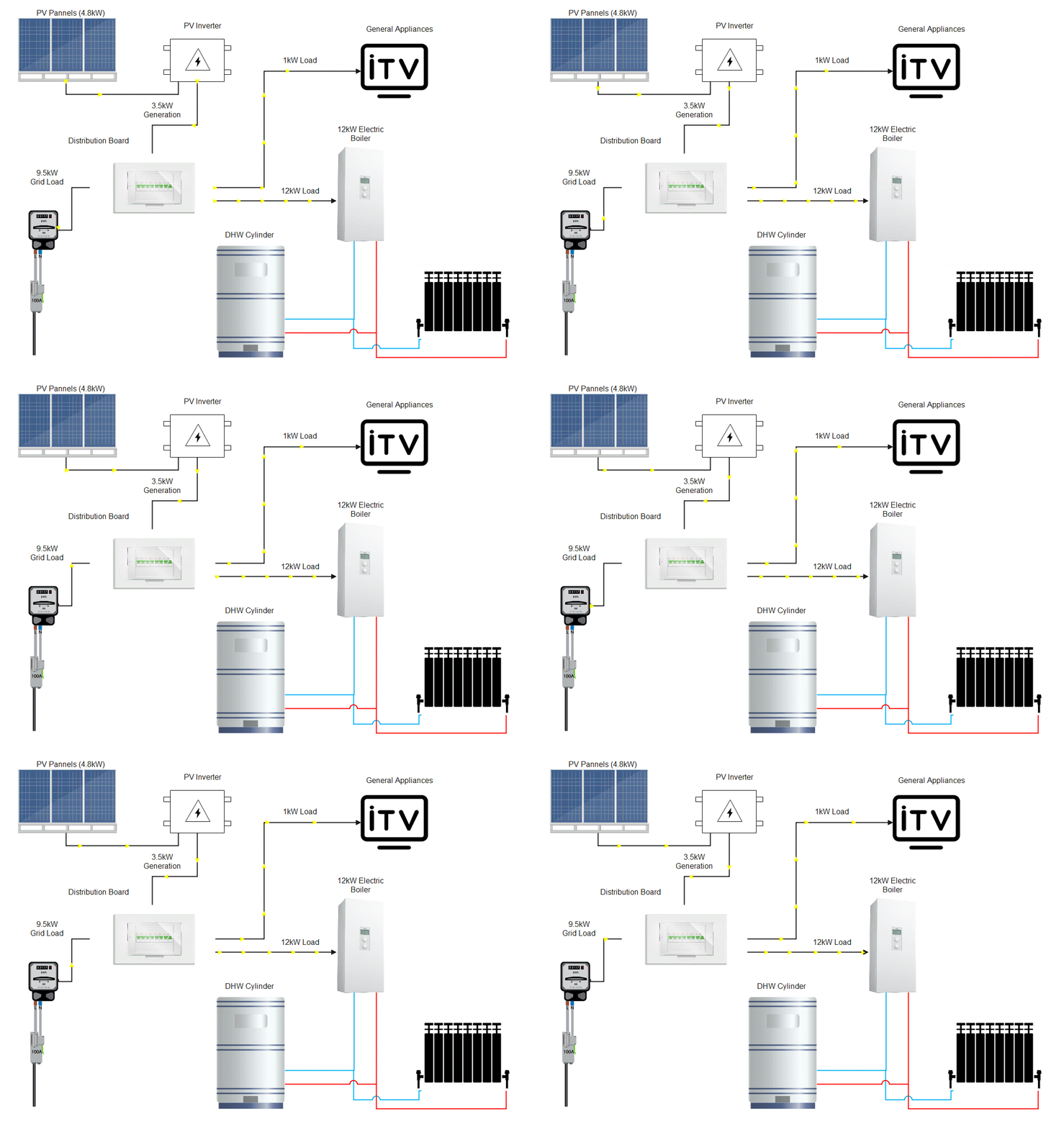
1. The Super Simple Setup – Using a standard PV installation alongside an electric boiler, the boiler operation naturally benefits from the default flow of PV-generated electricity when available.
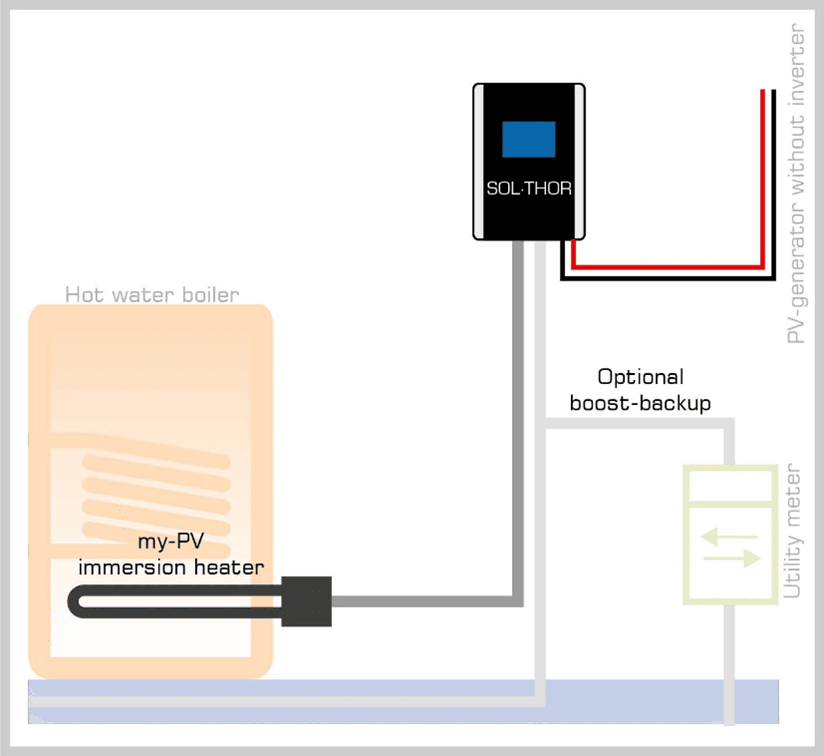
2. Simple Off-Grid Direct Hot Water Integration – In this setup, a small array of PV panels are directly connected to the hot water cylinder only, either in addition to an existing grid-tied PV array or as a sole standalone PV array for the property.
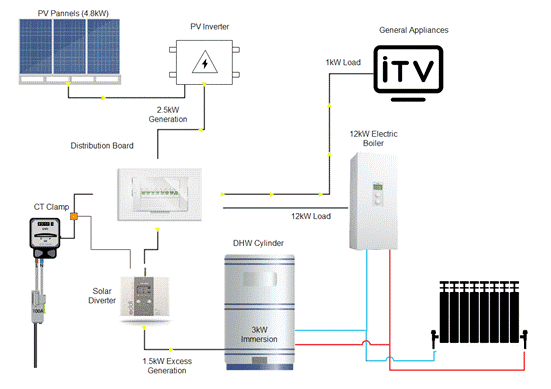
3. Standard Grid-Connected PV installation With Solar Diverter – this method harvests PV-generated power to directly heat the Domestic Hot Water Cylinder by integrating a solar diverter to monitor for any excess solar PV generation being exported to the Grid. The value of exported power is automatically diverted to heat the hot water cylinder.
4. Standard PV installation With Solar Diverter & Battery Storage - this method harvests PV-generated power to charge battery storage for later. Once the battery storage is fully charged, any additional power generated by the PV panels can be used to directly heat the Domestic Hot Water Cylinder by integrating a solar diverter to monitor for any excess solar PV generation being exported to the Grid. The value of exported power is automatically diverted to heat the hot water cylinder.
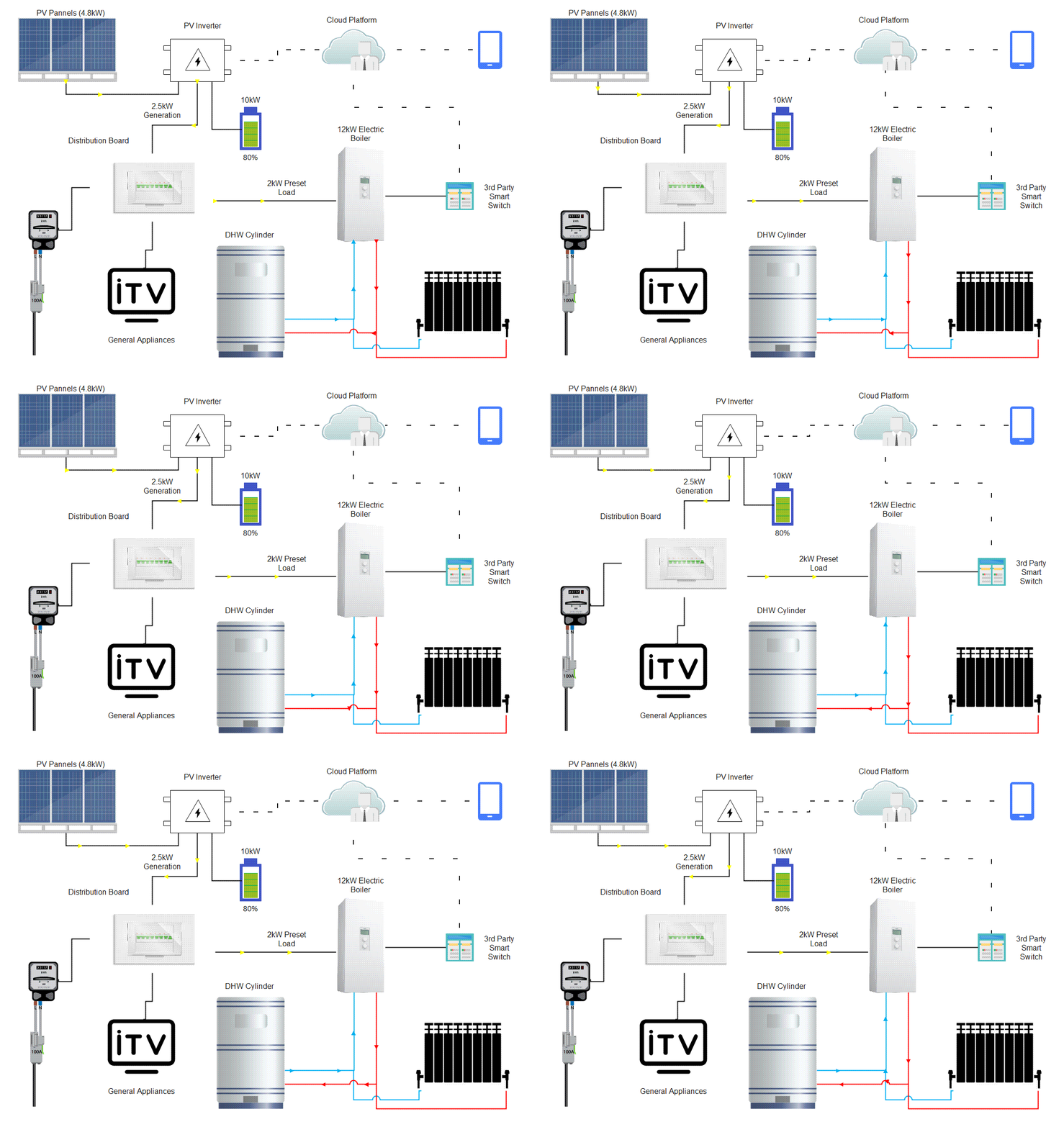
5. The Ultimate PV solution – using EHC’s Comet PV electric system boiler with an intelligent smart Inverter, with or without battery storage for maximum utilisation of solar PV generation. This setup automatically diverts excess solar PV generation via the electric boiler to heat the Domestic Hot Water cylinder and the general heating system, rather than wasting it by exporting it back to the grid.
The Super Simple Setup
Using a standard PV installation alongside an electric boiler, the boiler operation naturally benefits from the default flow of PV-generated electricity when available.
Equipment Required: Solar PV Panels, Inverter, Electric Boiler & Hot Water Cylinder
Benefits Of This Solution:
• All electric boilers and appliances are compatible out of the box with a Solar PV installation, requiring no additional specialised equipment to benefit from generated power.
• When power is being generated, all appliances in the property will naturally consume the generated power.
Shortcomings Of This Solution:
• If the appliance load is less than the power generated from the PV array, the excess generation feeds back to the grid. Power exported back to the grid is considered wasted generation.
• The percentage of generated power that is consumed vs. wasted is simply down to luck.
• The percentage of generated power that is consumed vs wasted is simply down to luck, and consumption needs to be controlled manually.
Simple Off-Grid Direct Hot Water Integration
In this setup, a small array of PV panels are directly connected to the hot water cylinder only, either in addition to an existing grid-tied PV array or as a sole standalone PV array for the property. This method can be used in an installation where you don’t want the PV panels grid-tied, i.e. feeding back into the domestic electricity network, or where the DNO has imposed a restriction on the number of panels which can be connected to the network. In the latter of the two, the property may have sufficient roof space for additional panels; these can be installed independently of the standard PV system without requiring a second inverter. Instead, the additional PV panel array can be directly connected to a Sol-Thor Controller, which then supplies a 3kW immersion heater in the Domestic Hot Water Cylinder.
Equipment Required: Solar PV Panels, Sol-Thor Controller, Hot Water Cylinder & Electric Boiler
Benefits Of This Solution:
• Provides the ability to heat domestic hot water from PV-generated power in a simple manner without connecting the PV system to the main electrical system.
• Allows for additional PV generation where a DNO imposes a limit on the standard PV installation capacity due to limitations in the electricity supply network.
• It is a cost-effective method to heat only the domestic hot water with free self-generated power.
Shortcomings Of This Solution:
• PV array has limited capacity as it is only supplying a 3kW immersion element.
• The rest of the appliances in the property do not benefit from the free electricity generated by the PV panels
• Once the hot water cylinder is fully charged, any further electricity generated by the PV array is unusable.
Standard Grid-Connected PV installation with Solar Diverter
This method harvests PV-generated power to directly heat the Domestic Hot Water Cylinder by integrating a solar PV diverter. A PV Diverter is a 3rd party piece of equipment which monitors power flow between the Grid and the property’s distribution board. When excess power is exported to the grid, the diverter switches on a connected resistive load, driven by a variable-voltage output, to match and consume the same power. In 95% of installations, this would be the Hot water cylinder immersion element. The value of exported power, which would otherwise be wasted by exporting to the grid, is then automatically diverted to heat the hot water cylinder, which achieves a greater financial gain for the property occupants.
Equipment Required: PV Panels, Inverter, Solar Diverter, Hot Water Cylinder & Electric Boiler
Benefits Of This Solution:
• Provides the ability to heat domestic hot water from PV-generated electricity automatically when the system starts to export excess generation back to the grid.
• Using this setup, we take otherwise-wasted generated power and automatically use as much of it as possible to theoretically heat the hot-water cylinder at Zero cost most of the year.
Shortcomings Of This Solution:
• Since the cylinder can only hold a certain amount of energy, on a good day, some generation will still be wasted back to the grid.
• Additional installation costs are incurred to supply and install the Solar PV diverter.
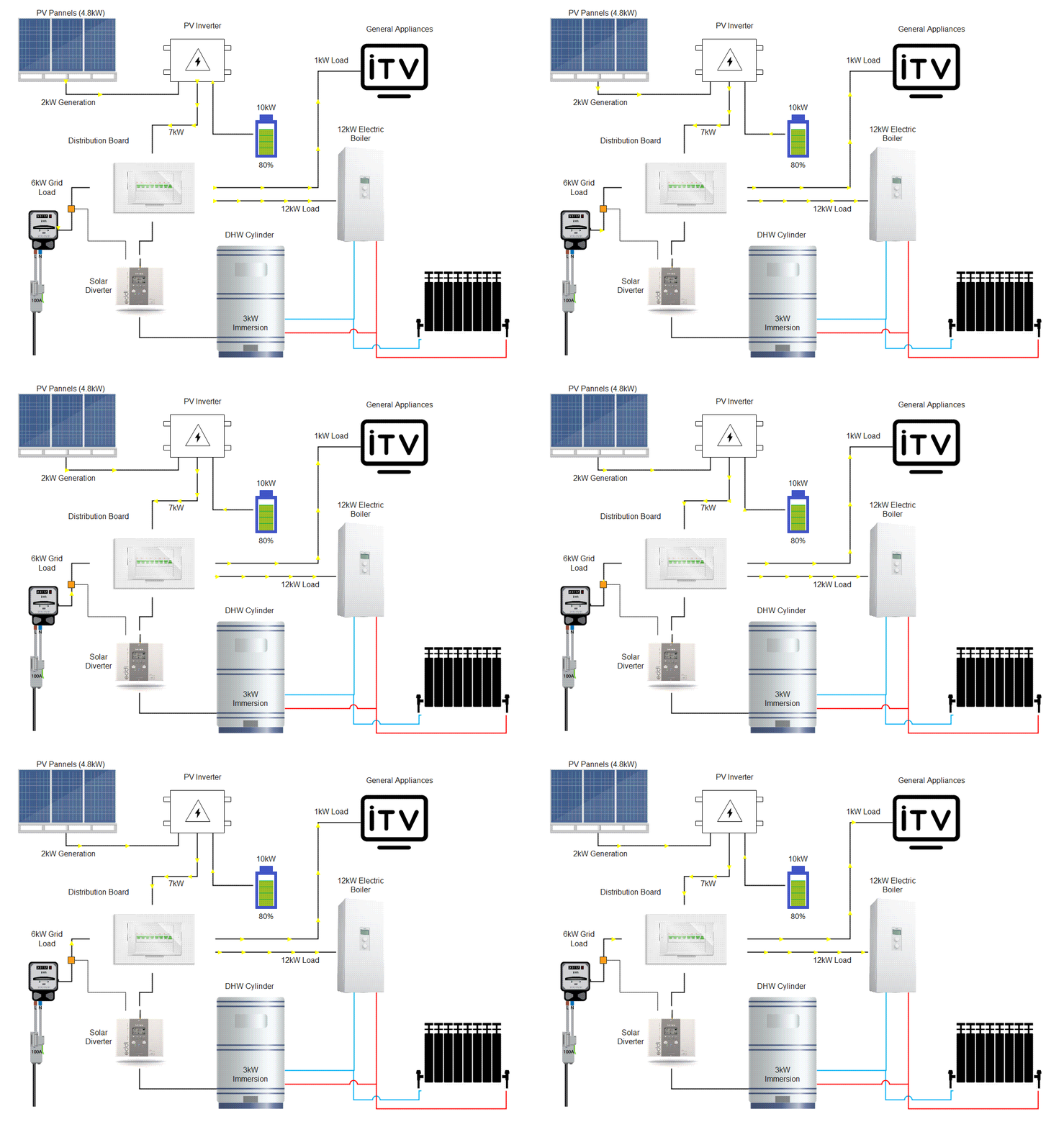
Standard PV installation with Battery Storage &/or
This method primarily harvests PV-generated power to charge battery storage for later use. The battery can then be set to discharge at a later time, during peak consumption by general appliances or when an electric heating system starts up in the evening. Once the battery storage is fully charged, any additional power generated by the PV panels will naturally export back to the grid; however, a solar PV diverter can also be added to this setup to enable further controlled use of the generated electricity. The generated power, which would otherwise be wasted by exporting it to the grid when the battery reaches full capacity, is automatically diverted to heat the hot water cylinder, yielding greater financial gain for the property's occupants.
Equipment Required: PV Panels, Smart/Hybrid Inverter, Battery Storage. Solar Diverter (Optional), Hot Water Cylinder & Electric Boiler
Benefits Of This Solution:
• The inverter is configured to prioritise charging the battery with PV-generated power before allowing the generated power to naturally flow into the property’s electrical system and/or back to the grid.
• The battery is ideally programmed only to start discharging into the property at a later time in the day or evening, when panels are naturally producing less power or there is a supply peak rate period.
• If a solar diverter has also been installed, once the battery is fully charged and the inverter is supplying power to the property, the diverter again steps in and attempts to consume any surplus power for the hot water cylinder.
Shortcomings Of This Solution:
• In most cases, an appliance with a single load greater than 5kW will always draw some of its power from the grid, because most inverters are limited to 5kW output regardless of whether a 10 or 20kW battery is available. A few newer inverters entered the market in 2025 with an uprated output of up to 10kW.
The Ultimate PV solution
This method utilises an EHC’s Comet PV electric system boiler with an intelligent inverter, with or without battery storage, for maximum utilisation of solar PV generation. This setup automatically diverts excess solar PV generation via the electric boiler to heat the Domestic Hot Water cylinder and the general heating system. The unique advantage of this configuration is that excess PV generation can be utilised to heat the hot water cylinder, but then go a step further by ingesting the PV-generated power into the main heating system, effectively acting as a preheat within the radiator circuit. Less electricity is then consumed from the grid during the boiler's timed period because the system is already at a higher base temperature, meaning the boiler has less work to do to reach the occupant's target temperature. Furthermore, the Comet PV boiler provides this capability without the need to purchase additional equipment, such as the Solar PV diverter mentioned earlier in this guide, which benefits only domestic hot water production.
Equipment Required: PV Panels, Smart Inverter, Smart Switch Device, Hot Water Cylinder & Comet PV Electric Boiler with or without Battery Storage.
Benefits Of This Solution:
• The Comet PV boiler allows PV-generated power to be consumed while it is being generated, rather than simply coinciding with the user activating heating.
• When the PV terminal is activated, the boiler will enter PV mode if it is in standby. The boiler will operate at a predefined, fixed output that is much lower than its normal operating output and aligned with a realistic value based on the installed PV array. i.e. if the array is 4.8kW, PV mode will likely be set to 1 or 2kW. This setting can be increased proportionally for larger PV arrays.
• When the boiler is active in PV mode, the predefined power output will be sent to the DHW cylinder until the water temperature reached 65 degrees, once the DHW cylinder is satisfied the boiler will then divert the free energy into the general heating system to act as a preheat resulting in a reduced grid consumption when the next heating period starts, as the water within the system will already be partially heated.
Shortcomings Of This Solution:
• Only works with PV inverters that have a cloud management system, which can integrate with other home smart devices and smart switches, for example, Shelly.